
🌟 Government-Funded CNA to LPN Programs: The Best Path for CNAs Over 45 to Become Licensed Practical Nurses (LPN)
Government-funded | Online Courses | CNA to LPN Program
In the United States, there is a growing shortage of Licensed Practical Nurses (LPNs), especially in long-term care, nursing homes, and rehabilitation centers. CNAs are ideal candidates to quickly advance through CNA to LPN Programs, including Online LPN Bridge Programs and CNA to LPN Bridge Programs.
For CNAs over 45, career experience, stability, and motivation make this transition easier. Many programs are government-funded LPN programs, providing financial aid to support learners.
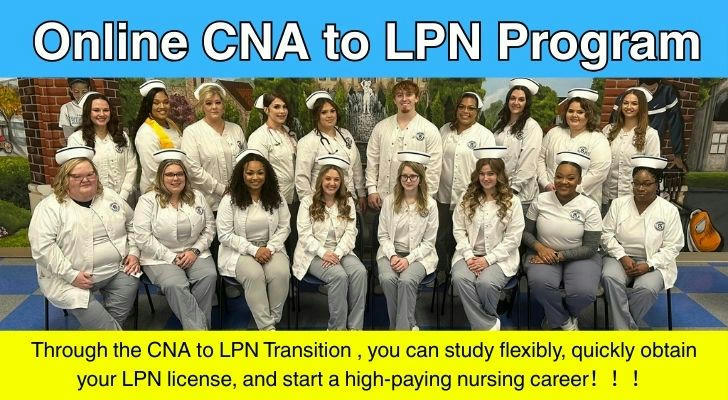
⭐ Advantages of CNA to LPN Programs
CNA to LPN Transition programs provide a flexible and efficient way for CNAs to advance their careers, especially suitable for working adults and mid-to-late career learners. Key advantages include:
Work while you learn: Complete online theory through Online LPN Bridge Programs without leaving your job
Shorter program duration: Most CNA to LPN Programs can be completed in 9–24 months, quickly moving to clinical training
Accredited and recognized: Most programs are approved by state nursing boards or vocational colleges
Affordable and flexible: Eligible for FAFSA, state grants, WIOA, scholarships, and payment plans
Smooth career progression: CNA to LPN Transition programs leverage your CNA experience for faster learning and exam success
Career advancement opportunities: After completing LPN, you can further pursue RN or BSN programs
With an LPN license, you can work in hospitals, rehabilitation centers, long-term care facilities, clinics, or home care, gaining higher pay, reduced physical workload, and long-term job stability.
⭐ Why CNA to LPN Programs Are Ideal for Professionals Over 45
For CNAs over 45, CNA to LPN Bridge Programs offer several advantages:
Experienced learners excel: Mature students grasp LPN clinical skills faster
Reduced physical burden: LPN roles focus more on clinical tasks than the physically demanding CNA duties
Flexible schedules: Online theory and local clinical rotations fit your work and family commitments
Financial support: Government-funded LPN Programs like FAFSA, state grants, WIOA, and scholarships help reduce tuition pressure
Age is not a barrier: Many learners in their 40s, 50s, and 60s have successfully completed these programs
Career stability: Graduates can work in hospitals, rehabilitation centers, long-term care facilities, clinics, or home care
📘 What You Will Learn in a CNA to LPN Program
Courses typically cover:
- Advanced nursing skills (patient assessment, care plan development)
- Medication administration (IV, oral, intramuscular)
- Anatomy, physiology, and pathology fundamentals
- Geriatric care and chronic disease management
- Medical documentation and Electronic Health Records (EHR)
- Clinical rotations arranged by the school
Upon completion, you will be eligible to take the NCLEX-PN licensing exam.
💼 Job Outlook and Salary
According to the U.S. Bureau of Labor Statistics (BLS):
- Average LPN salary: $54,000+ per year (varies by state)
- Typically 30–60% higher than CNA salaries
- Strong demand nationwide ensures job stability and advancement opportunities
- Further education pathways: LPN → RN → BSN
- LPN is one of the fastest-growing healthcare roles in the U.S., making it an ideal long-term career choice
✅ Government Support and Scholarships for CNA to LPN Programs
For CNAs aiming to transition into LPN roles, there are several financial support options available from federal, state, and employer sources:
🏛️ Federal Financial Aid (FAFSA)
- Pell Grants that cover a significant portion of tuition
- Federal student loans (subsidized or unsubsidized)
- Work-Study programs to earn while learning
🎓 Nursing Scholarships and State Grants
- Nurse Corps Scholarship Program (HRSA) – provides tuition coverage plus a stipend for serving in high-need areas
- State-specific grants, such as Cal Grant or NY TAP, for eligible students
🏥 Employer-Supported Programs
- Hospitals and nursing homes may offer tuition reimbursement
- Some programs provide paid LPN training in exchange for service after graduation
These government-funded LPN programs allow CNAs to advance their careers without worrying about tuition, making it easier to gain an LPN license and secur.
🎓 Recognized Institutions Offering CNA to LPN Programs
Rasmussen University – CNA to LPN Bridge Program, 12–18 months, combining online theory with clinical practice
Midlands Technical College – State-approved courses with hands-on clinical experience
Montgomery Community College – Focus on practical skills, affordable tuition, small class sizes
Herzing University – 12-month diploma combining online and clinical training, preparing CNAs for LPN licensure and future LPN→RN progression
Most Online LPN Bridge Programs provide online or hybrid formats, allowing CNAs to continue working while studying.
👥 Suitable for Different Age Groups Over 45
45–55 years: Prime period for career advancement, easier access to financial aid, can work full-time while studying online
55–65 years: Stable career opportunities, welcomed by healthcare employers, flexible part-time or full-time options, reduced learning pressure
65+ years: Still able to enter home care or long-term care positions, flexible schedules suit semi-retired learners
No matter your age, CNA to LPN Programs provide higher pay, job stability, and career growth opportunities.
📝 How to Apply for CNA to LPN Programs
- Confirm your state’s LPN requirements (hours, certification)
- Choose a school that accepts FAFSA/WIOA
- Submit application materials: CNA certificate, academic transcripts, background check
- Apply for financial aid (Government-funded LPN Programs, scholarships)
- Complete online theory + local clinical rotations
- Prepare for and pass the NCLEX-PN licensing exam
- Register as a state Licensed Practical Nurse (LPN)
🌈 Ready to Become an LPN?
If you are a CNA looking to earn higher pay, more stable positions, and advanced nursing skills, CNA to LPN Programs—including CNA to LPN Transition and Online LPN Bridge Programs—are the most practical, cost-effective career upgrade.
No matter if you are 45, 55, 65, or even 70, the U.S. healthcare industry welcomes experienced, patient, and responsible adult learners. With government-funded financial support, you can achieve your LPN licensure without worrying about tuition and start a rewarding new career path.